
Stages 01–03
Design the right thing
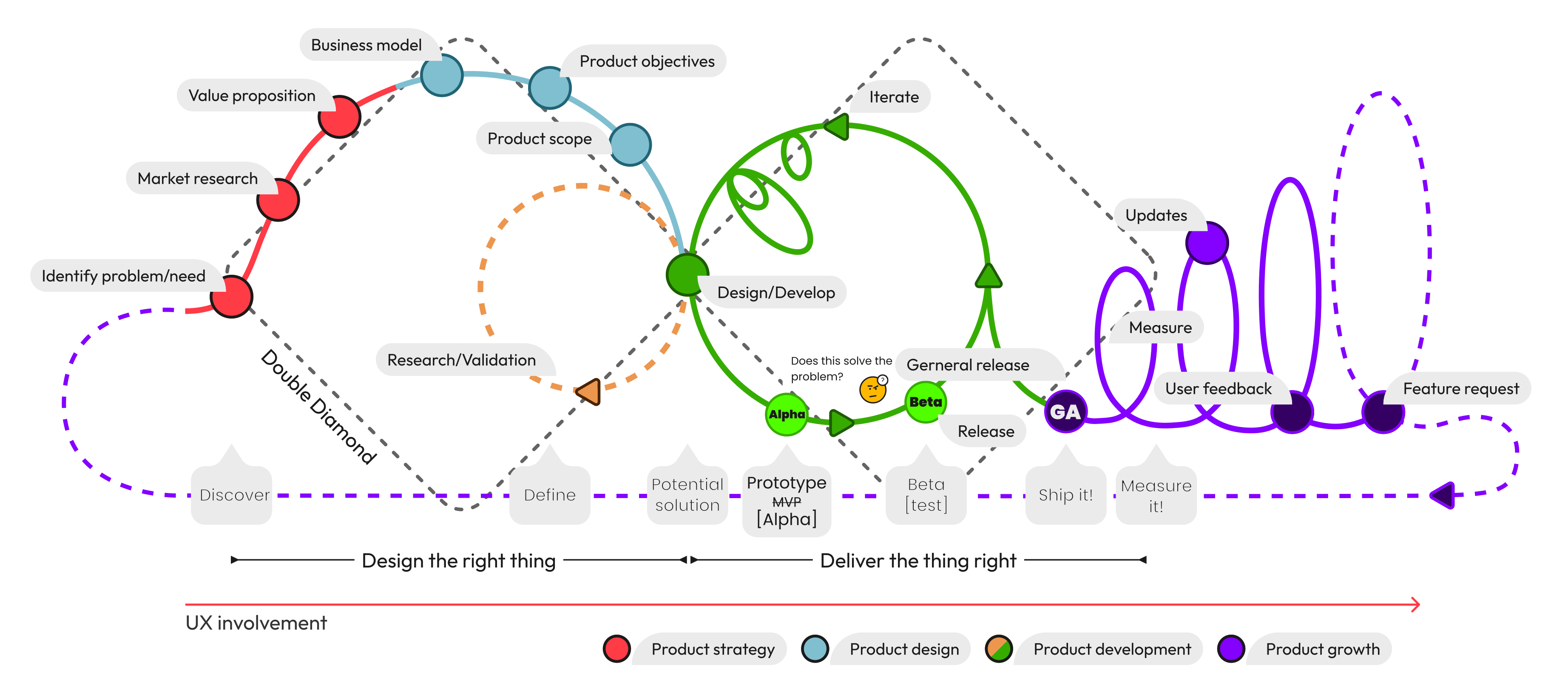
A double diamond: open up to understand the problem, then narrow to one direction worth building. Most failed products skip this half.
Stages 04–07
Deliver the thing right
Prototype, test, ship, and measure — in short loops, so the product gets better on evidence instead of opinion.
Seven stages
From a problem to a product people keep using.
01
Discover
Name the problem before anyone names a solution. We look at the need, the market around it, and what would make your answer worth choosing.
Identify problem/need
Market research
Value proposition
02
Define
Turn what we learned into something buildable: the business model, the product objectives, and a scope everyone signs.
Business model
Product objectives
Product scope
03
Potential solution
The first working version, in front of real people early. Small loops of iteration before anything is called finished.
Alpha
Iterate
04
Prototype
MVP → Alpha
Research and validation narrow the options to one direction worth designing and developing properly.
Research/Validation
Design/Develop
05
Beta
Test
A wider release that asks one question honestly: does this solve the problem? If not, we loop back and iterate.
Beta
Release
Does this solve the problem?
06
Ship it
Test
General release. The product goes out to everyone, with the instrumentation in place to learn from it.
General release
GA
07
Measure it
Real usage tells us what to do next. Feedback becomes updates, and feature requests feed the next discovery.
Measure
User feedback
Updates
Feature request
01
Discover
Name the problem before anyone names a solution. We look at the need, the market around it, and what would make your answer worth choosing.
Identify problem/need
Market research
Value proposition
02
Define
Turn what we learned into something buildable: the business model, the product objectives, and a scope everyone signs.
Business model
Product objectives
Product scope
03
Potential solution
The first working version, in front of real people early. Small loops of iteration before anything is called finished.
Alpha
Iterate
04
Prototype
MVP → Alpha
Research and validation narrow the options to one direction worth designing and developing properly.
Research/Validation
Design/Develop
05
Beta
Test
A wider release that asks one question honestly: does this solve the problem? If not, we loop back and iterate.
Beta
Release
Does this solve the problem?
06
Ship it
Test
General release. The product goes out to everyone, with the instrumentation in place to learn from it.
General release
GA
07
Measure it
Real usage tells us what to do next. Feedback becomes updates, and feature requests feed the next discovery.
Measure
User feedback
Updates
Feature request
Four disciplines
One team carries the product the whole way.
The colours on the map are the four disciplines. Each hands over to the next inside the same team — no agency changeover between strategy and build.
01
Product strategy
Why it should exist, and for whom.
- Identify problem/need
- Market research
- Value proposition
02
Product design
What it is, and where its edges are.
- Business model
- Product objectives
- Product scope
03
Product development
Validated, designed, built, and released.
- Research/Validation
- Design/Develop
- Alpha
- Beta
- Iterate
- Release
04
Product growth
Measured, improved, and extended after launch.
- General availability
- Measure
- User feedback
- Updates
- Feature request
After launch
Shipping isn’t the end of the line.
General availability starts the growth loop. Every feature request travels back to Discover, so the next version starts from evidence.
1
Measure
Usage, drop-off, and the metrics agreed in Define.
2
User feedback
What people say, set against what they actually do.
3
Updates
Fixes and refinements shipped on a steady rhythm.
4
Feature request
New needs go back to Discover — and the loop starts again.
UX involvement
Design stays in the room from first problem to feature request.
On many projects, designers hand off at the prototype and leave. On ours, the same people who framed the problem are there for the beta, the release, and the first round of feedback. Three things from you keep it on schedule:
One decision-maker
Someone who can approve at the end of each round.
Access to users
Five conversations beat fifty opinions in a meeting room.
Feedback within 48 hours
Fast reviews do more for the timeline than anything else.
UI/UX design
Research, flows and interface design.
SaaS apps & web production
Product UI, sites and responsive builds.
Branding & motion
Identity systems and launch assets.
E-commerce web design
Storefronts built around the path to purchase.
AI development
Generative engines, assistants and agents.
AI product development
Workshops, prototype sprints and AI MVPs.